
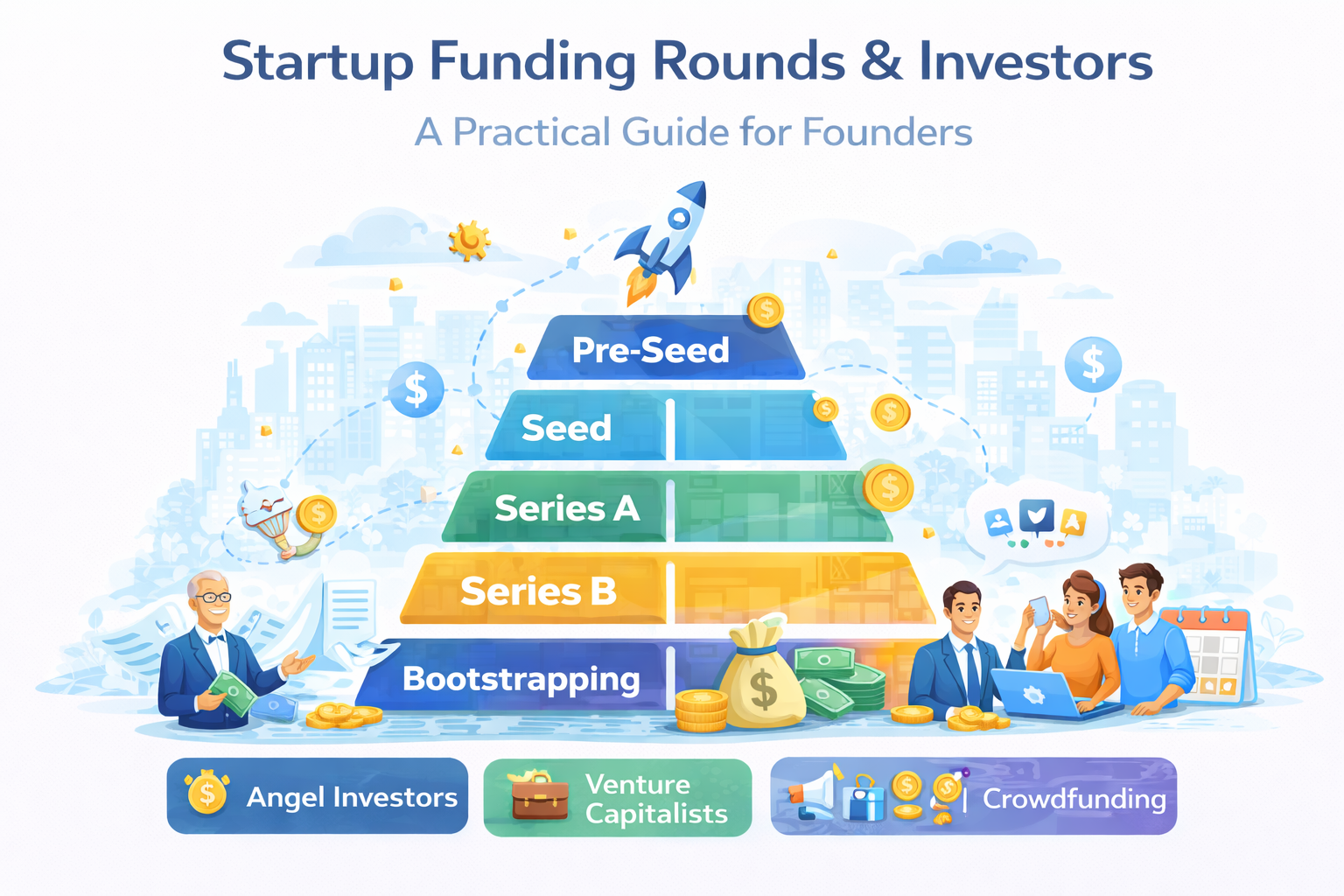
Introduction
Starting a startup often requires more than just a good idea and a strong team. As a business begins to grow, it usually needs additional capital to build products, hire employees, expand marketing efforts, and scale operations. This is why many startups look for external funding from investors.
In the startup ecosystem, funding is usually raised in different stages known as funding rounds. Each funding round represents a new phase of growth where startups raise capital to achieve specific business goals. At every stage, different types of investors may participate depending on the startup’s growth level and potential.
Understanding how startup funding rounds work is important for founders who want to raise investment and grow their business successfully. In this article, we will explain startup funding rounds, the types of investors involved, and how startups raise capital at different stages of growth.
What Are Startup Funding Rounds
Startup funding rounds are stages in which a startup raises money from investors to support the growth of the business. Instead of raising all the capital at once, startups usually collect funding in different phases as the company develops and expands.
Each funding round represents a specific stage in the startup’s journey. In the early stages, startups may raise smaller amounts of money to build a product or test their business idea. As the company grows and begins to gain customers and revenue, it may raise larger rounds of funding to scale operations and expand into new markets.
During these funding rounds, startups typically offer a portion of their company ownership, known as equity, to investors in exchange for capital. The amount of funding raised and the company’s valuation usually increase as the startup shows stronger growth and market potential.
Understanding startup funding rounds helps founders plan their fundraising strategy and choose the right investors at the right stage of their business.
Why Startups Raise Funding
Startups often raise funding to support the growth and development of their business. In the early stages, many startups do not generate enough revenue to cover all their expenses. External funding helps founders build their products, expand their teams, and grow their operations more quickly.
One common reason startups raise funding is to develop and improve their products. Building a product usually requires investment in technology, design, testing, and infrastructure. Funding allows startups to create better solutions and deliver more value to their customers.
Another important reason is hiring talent and building a strong team. As the startup grows, it needs skilled employees such as developers, designers, marketers, and operations managers. Investment capital helps startups attract and retain the right talent.
Startups also raise funding to expand their marketing and customer acquisition efforts. Marketing campaigns, partnerships, and promotional activities require financial resources, especially when a company wants to reach a larger audience.
In many cases, funding helps startups scale their business faster. With additional capital, companies can expand into new markets, improve their technology, and strengthen their competitive position in the industry.
Early-Stage Startup Funding Rounds
Early-stage funding rounds usually happen when a startup is still developing its product and trying to find its first customers. At this stage, the company may not yet have strong revenue, but it has a promising idea and growth potential that can attract early investors.
1. Pre-Seed Funding
Pre-seed funding is typically the first stage of startup financing. At this point, the startup is often in the idea or prototype stage. Founders may use this funding to conduct market research, build an early version of the product, and validate the business concept.
Investors in pre-seed rounds are usually friends, family members, or early supporters who believe in the founders and their vision.
2. Seed Funding
Seed funding is the next stage after pre-seed. At this stage, the startup usually has a working product or prototype and may have started attracting early users or customers.
The main goal of seed funding is to develop the product further, grow the team, and start building a customer base. Seed funding often comes from early-stage investors such as Angel Investors or small Venture Capital Firms that specialize in supporting young startups.
Growth-Stage Startup Funding Rounds
Once a startup moves beyond the early stages and begins to show real growth, it may enter the growth-stage funding rounds. At this point, the company usually has a working product, a growing customer base, and some level of revenue. Funding in this stage is mainly used to expand the business and scale operations.
1. Series A Funding
Series A is typically the first major venture capital funding round for a startup. At this stage, the company has usually proven that its product works and that there is demand in the market.
The goal of Series A funding is to help the startup improve the product, expand the team, and grow the customer base. Investment in this round often comes from established Venture Capital Firms.
2. Series B Funding
Series B funding usually happens when a startup is already growing and needs more capital to scale its operations. At this stage, the company may focus on expanding into new markets, improving infrastructure, and increasing marketing efforts.
Investors in this round expect the startup to have a strong business model and consistent growth.
3. Series C Funding
Series C funding is generally raised by startups that are already well established and looking to expand even further. The capital raised in this round is often used for large-scale expansion, acquisitions, or entering international markets.
At this stage, startups may attract investment from larger venture capital firms, institutional investors, or private equity firms.
Types of Investors in Startup Funding
In the startup ecosystem, different types of investors participate in funding rounds depending on the stage of the business. Each type of investor has different goals, investment sizes, and expectations from the startup.
1. Friends and Family Investors
In the earliest stages, many founders raise funding from friends and family. These investors usually provide small amounts of capital to help the startup begin operations, develop the initial product, or test the business idea.
2. Angel Investors
Angel Investors are individuals who invest their personal money in early-stage startups. They often invest during the pre-seed or seed stage and may also provide guidance, mentorship, and industry connections to founders.
3. Venture Capital Firms
Venture Capital Firms invest larger amounts of money in startups that show strong growth potential. Venture capital firms usually participate in funding rounds such as Series A, Series B, or later stages.
4. Institutional Investors
Institutional investors include organizations such as investment funds, private equity firms, and financial institutions that invest large amounts of capital in growing companies. These investors often participate in later-stage funding rounds when the startup has already achieved significant growth.
How Startup Funding Rounds Work
Startup funding rounds follow a structured process where founders present their business to potential investors and raise capital in exchange for equity. This process helps startups secure the financial resources they need to grow and expand their operations.
1. Preparing a Pitch Deck
The first step in raising funding is creating a pitch deck. This presentation explains the startup’s business idea, product, market opportunity, business model, and growth strategy. Founders use the pitch deck to introduce their startup to potential investors.
2. Meeting Potential Investors
After preparing the pitch deck, founders usually start meeting with investors. These meetings allow founders to present their business idea, explain the product, and discuss the company’s vision and growth plans.
3. Startup Valuation
If investors show interest, the next step is determining the valuation of the startup. Valuation represents the estimated value of the company and helps decide how much equity the startup will offer in exchange for the investment.
4. Negotiating Investment Terms
During this stage, founders and investors negotiate the investment terms. This may include the amount of funding, the percentage of equity offered, and other important conditions related to the investment.
5. Finalizing the Investment Deal
Once both sides agree on the terms, legal documents are prepared and the investment deal is finalized. After the agreement is completed, the startup receives the funding and can use it to grow the business and achieve its next milestones.
Challenges in Startup Funding
Raising funding can be an important step for startups, but it often comes with several challenges. Many founders find that securing investment is a complex and competitive process that requires careful planning and strong business fundamentals.
1. Finding the Right Investors
One common challenge is finding investors who truly understand the startup’s vision and industry. Not every investor is the right fit for every business, so founders need to identify investors who are interested in their sector and growth potential.
2. Proving the Business Model
Investors usually want to see clear evidence that the startup’s business model can succeed. If the company has not yet shown strong traction, customer growth, or revenue potential, convincing investors to invest can be difficult.
3. Valuation and Equity Dilution
During funding rounds, startups must decide how much of their company they are willing to give to investors. If too much equity is offered early on, founders may lose a significant portion of ownership in the long term.
4. Competitive Investment Environment
The startup ecosystem is highly competitive, and many startups are trying to raise funding at the same time. Investors often evaluate multiple companies before making a decision, which means startups need to present a strong value proposition.
5. Meeting Investor Expectations
After receiving funding, startups are expected to deliver strong growth and business performance. Managing investor expectations while continuing to build the product and grow the company can be a challenging task for many founders.
Tips for Startups When Raising Funding
Raising funding can be a challenging process for startups, especially for first-time founders. By following a few practical strategies, startups can improve their chances of attracting the right investors and securing the funding they need.
1. Build a Strong Business Plan
Before approaching investors, startups should have a clear and well-structured business plan. This should explain the problem the startup is solving, the target market, the business model, and the growth strategy.
2. Validate the Product Idea
Investors prefer startups that have already validated their product idea. This can include early users, customer feedback, or initial revenue that shows the product has real market demand.
3. Prepare a Clear Pitch Deck
A strong pitch deck helps founders present their business effectively to investors. It should clearly explain the product, market opportunity, revenue model, and the startup’s long-term vision.
4. Focus on Building Investor Relationships
Fundraising is not only about presenting an idea but also about building relationships with investors. Founders should communicate their vision clearly and maintain transparency during discussions.
5. Choose the Right Investors
Not all investors are the right fit for every startup. Founders should look for investors who understand their industry and can provide valuable guidance, connections, and long-term support.
Conclusion
Startup funding rounds play an important role in helping young companies grow and expand their businesses. By raising capital at different stages, startups can develop their products, build strong teams, and reach more customers in the market.
Each funding round represents a new phase of growth, and different types of investors may participate depending on the startup’s progress and potential. Understanding how these funding stages work helps founders plan their fundraising strategy more effectively.
At the same time, raising funding also requires careful planning and preparation. Startups need a strong business model, a clear growth strategy, and the ability to demonstrate real market demand.
In the end, when founders understand the funding process and choose the right investors, they can secure the resources needed to build a successful and sustainable startup.
Related Posts
Startup Booted Financial Modeling
Understand how startups plan revenue, expenses, and cash flow using financial modeling.
Startup Booted Fundraising Strategy
Learn how startups can grow using bootstrapping before raising external funding.
software development for startups
Discover how startups build scalable software and launch successful digital products.