
Introduction
Fintech startups are changing the way people manage money, make payments, and access financial services. From digital payments to online lending platforms, many new fintech companies are building innovative products that make financial services faster and more convenient.
However, building a successful fintech product is not easy. These startups need to handle complex financial systems, follow strict regulations, and ensure that their products remain secure and reliable for users. To manage all these aspects effectively, fintech startups rely heavily on product managers.
A product manager plays a key role in guiding the development of a product from idea to launch. They work closely with different teams such as developers, designers, and business teams to ensure the product solves real customer problems and meets business goals.
In this article, we will explore the responsibilities of a product manager in a fintech startup, why this role is important, and how product managers help fintech companies build and improve their financial products.
What Is a Product Manager in a Fintech Startup
A product manager in a fintech startup is responsible for planning, developing, and improving financial products that solve real user problems. These products can include services such as digital payments, lending platforms, investment apps, or financial management tools.
In simple terms, the product manager acts as the bridge between business goals, technology, and customer needs. They work closely with different teams such as developers, designers, marketing teams, and business leaders to make sure the product is built in the right way.
In fintech startups, the role of a product manager becomes even more important because financial products must follow security standards, compliance requirements, and strict regulations. Product managers help ensure that the product is not only useful for customers but also reliable and compliant with financial rules.
Their main goal is to guide the product from the initial idea to launch and continuously improve it based on user feedback and market needs. By understanding both the business strategy and the customer experience, product managers help fintech startups build products that can succeed in a competitive market.
Why Product Managers Are Important in Fintech Startups
Product managers play a crucial role in fintech startups because they help connect customer needs, business goals, and technology development. In fast-growing fintech companies, multiple teams work together to build financial products, and product managers ensure that everyone is moving in the same direction.
One of the main reasons product managers are important in fintech startups is that financial products are often complex. These products must be secure, reliable, and compliant with financial regulations. Product managers help guide the development process so that the product meets both user expectations and regulatory requirements.
Product managers also help prioritize product features and improvements. Since startups usually work with limited resources and tight timelines, they must decide which features should be developed first. Product managers analyze customer needs and market trends to make these decisions more effectively.
In addition, product managers ensure that the product delivers real value to users. By collecting feedback, studying user behavior, and working closely with development teams, they continuously improve the product and help the startup remain competitive in the fintech market.
Key Responsibilities of a Fintech Product Manager
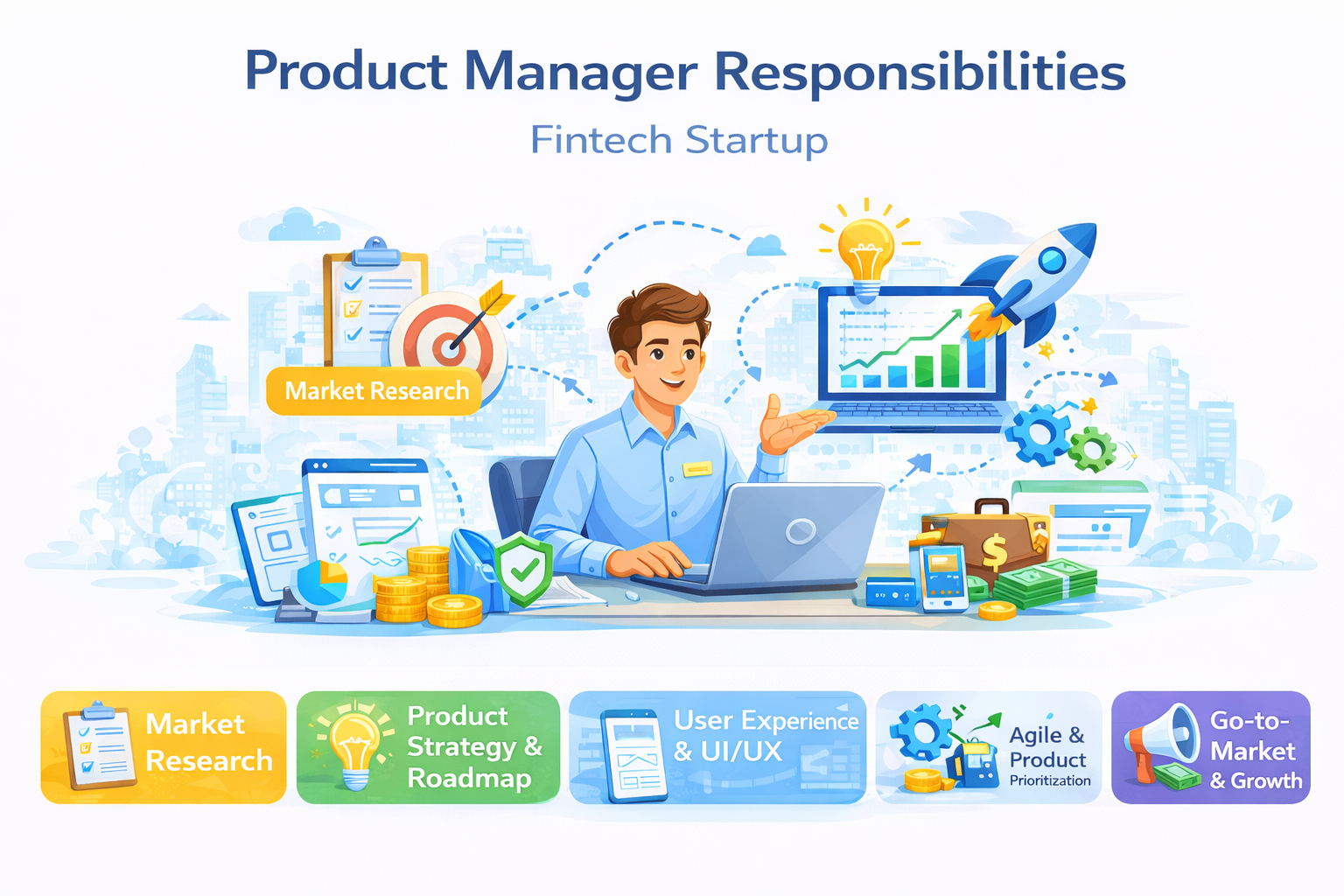
A product manager in a fintech startup is responsible for guiding the product from the early idea stage to launch and continuous improvement. Their role involves working closely with multiple teams and ensuring that the product meets both customer needs and business goals.
1. Defining Product Strategy
One of the main responsibilities of a fintech product manager is to define the product strategy and vision. They identify the problems the product will solve and create a roadmap that guides the development of new features and improvements.
2. Understanding Customer Needs
Product managers must deeply understand their users. They analyze customer feedback, user behavior, and market trends to ensure that the product solves real financial problems and provides value to its users.
3. Working With Cross-Functional Teams
Fintech product managers collaborate with different teams such as developers, designers, marketing teams, and business stakeholders. Their job is to ensure that all teams work together efficiently to build and launch the product.
4. Managing Product Development
Product managers oversee the product development process. They prioritize features, define requirements, and ensure that the development team focuses on building the most important functionalities first.
5. Ensuring Security and Compliance
Since fintech products deal with financial data and transactions, security and regulatory compliance are extremely important. Product managers work with technical and legal teams to ensure the product follows the required financial regulations and security standards.
6. Monitoring Product Performance
After the product is launched, product managers continue to track its performance. They analyze metrics such as user engagement, customer feedback, and product usage to identify areas for improvement and guide future updates.
Product Development Process in Fintech Startups
In fintech startups, product development usually follows a structured process to ensure that the product is secure, reliable, and useful for customers. Product managers play a key role in guiding this process from the initial idea to the final launch.
1. Identifying the Problem
The first step in product development is identifying a real problem that customers face. Product managers study market trends, customer behavior, and industry challenges to understand what kind of financial solution is needed.
2. Defining Product Requirements
Once the problem is clear, the product manager defines the product requirements. This includes deciding the main features, user experience, and technical requirements needed to build the product.
3. Designing the Product
In this stage, designers and product teams work together to create the product structure and user interface. The goal is to design a simple and secure experience so that users can easily understand and use the financial product.
4. Development and Testing
After the design is finalized, the development team starts building the product. During this stage, continuous testing is done to ensure that the product works correctly, remains secure, and meets performance standards.
5. Product Launch
Once development and testing are complete, the startup launches the product in the market. Product managers coordinate with marketing and business teams to ensure a smooth launch and effective promotion.
6. Continuous Improvement
Product development does not stop after launch. Product managers regularly collect user feedback, analyze product performance, and introduce improvements to make the product better over time.
Important Skills for Fintech Product Managers
To manage financial products effectively, fintech product managers need a combination of business knowledge, technical understanding, and strong communication skills. Since fintech products involve both technology and financial services, product managers must be able to work across multiple areas.
1. Product Management Skills
Fintech product managers must understand the fundamentals of product management, such as defining product strategy, creating roadmaps, prioritizing features, and managing product development cycles.
2. Understanding of Financial Systems
Since fintech startups operate in the financial sector, product managers should have a basic understanding of financial services such as payments, lending, digital banking, and financial regulations.
3. Data Analysis Skills
Data plays an important role in product decisions. Product managers need to analyze user behavior, product performance metrics, and market trends to make informed decisions and improve the product.
4. Communication and Collaboration
Fintech product managers work with developers, designers, marketing teams, and business leaders. Strong communication skills are important to ensure that all teams understand the product goals and work together effectively.
5. Problem-Solving Ability
Startups often face unexpected challenges during product development. Product managers must be able to identify problems quickly and find practical solutions that keep the product development process moving forward.
6. Understanding of Security and Compliance
Because fintech products handle sensitive financial data, product managers should also understand basic security principles and regulatory requirements to ensure the product remains safe and compliant.
Common Challenges for Fintech Product Managers
Fintech product managers often face several challenges while building and managing financial products. Since fintech combines technology with financial services, product managers must handle both technical complexity and strict industry regulations.
1. Regulatory Compliance
One of the biggest challenges in fintech is dealing with financial regulations. Products must follow rules related to data protection, financial transactions, and user security. Product managers need to work closely with legal and compliance teams to ensure the product meets all required standards.
2. Security and Data Protection
Fintech products handle sensitive financial information, which makes security extremely important. Product managers must ensure that the platform has strong security measures to protect user data and prevent fraud or cyber threats.
3. Balancing User Experience and Compliance
Sometimes regulatory requirements can make financial products more complex. Product managers must find the right balance between maintaining compliance and providing a smooth and simple user experience.
4. Managing Cross-Functional Teams
Fintech product managers often work with multiple teams, including developers, designers, business teams, and compliance experts. Coordinating all these teams and ensuring everyone is aligned with product goals can be challenging.
5. Rapidly Changing Technology
The fintech industry evolves quickly with new technologies and innovations appearing regularly. Product managers must stay updated with industry trends and adapt their product strategies accordingly to remain competitive.
Tools Used by Fintech Product Managers
Fintech product managers use different tools to manage product development, track progress, analyze data, and improve team collaboration. These tools help organize workflows and ensure that product development runs smoothly.
1. Jira
Jira is widely used by product teams to manage development tasks and track project progress. Product managers use Jira to create tasks, assign work to developers, and monitor the status of product features during the development process.
2. Notion
Notion is often used for product documentation, planning, and team collaboration. Product managers can organize product roadmaps, maintain documentation, and manage project notes in a structured way.
3. Figma
Figma helps product managers work closely with design teams. It is used to create product interfaces, design prototypes, and review user experience before the product is developed.
4. Google Analytics
Google Analytics allows product managers to analyze user behavior, track website performance, and measure product engagement. This data helps them make better product decisions based on real user activity.
5. Slack
Slack is commonly used for team communication and collaboration. Product managers use it to coordinate with developers, designers, and other stakeholders to ensure smooth communication during product development.
Best Practices for Managing Fintech Products
Managing fintech products requires careful planning, strong collaboration, and a clear understanding of both technology and financial regulations. By following a few best practices, product managers can improve product quality and support long-term growth.
1. Focus on Customer Needs
Successful fintech products solve real financial problems for users. Product managers should regularly collect customer feedback, analyze user behavior, and understand market needs to ensure the product provides real value.
2. Prioritize Security and Compliance
Since fintech products deal with financial data and transactions, security and regulatory compliance must always be a top priority. Product managers should work closely with technical and legal teams to ensure the product meets industry standards and regulations.
3. Use Data for Decision-Making
Data-driven decisions help product managers understand how users interact with the product. By analyzing product metrics, user engagement, and performance data, they can identify areas for improvement and optimize product features.
4. Maintain Clear Product Roadmaps
A clear product roadmap helps teams stay aligned with the product vision and development priorities. Product managers should regularly update the roadmap to reflect changing business goals and customer needs.
5. Encourage Cross-Team Collaboration
Fintech products require collaboration between different teams, including development, design, marketing, and compliance. Product managers should ensure smooth communication between teams so that everyone works toward the same product goals.
Conclusion
Product managers play a crucial role in the success of fintech startups. They help guide the product from the initial idea to development, launch, and continuous improvement. By connecting business goals, technology, and customer needs, product managers ensure that fintech products deliver real value to users.
In fintech startups, the responsibilities of a product manager often include defining product strategy, managing development processes, ensuring regulatory compliance, and improving the product based on user feedback and data insights. Their ability to coordinate different teams and make strategic decisions helps startups build reliable and competitive financial products.
As the fintech industry continues to grow and evolve, the role of product managers will become even more important. Startups that focus on strong product management are better positioned to create innovative financial solutions and achieve long-term success.
Related Posts

Startup Booted Financial Modeling
Understand how startups plan revenue, expenses, and cash flow using financial modeling.

Startup Booted Fundraising Strategy
Learn how startups can grow using bootstrapping before raising external funding.

software development for startups
Discover how startups build scalable software and launch successful digital products.