
Introduction
Managing finances is one of the most important challenges for startups. In the early stages, founders often focus on building the product, acquiring customers, and growing the business. However, without proper financial planning and strategic guidance, it can become difficult for a startup to manage cash flow, control expenses, and plan for long-term growth.
Many early-stage startups cannot afford to hire a full-time Chief Financial Officer (CFO). A full-time CFO can be expensive, especially for startups that are still managing limited resources and budgets. Because of this, many startups choose an alternative solution known as a fractional CFO.
A fractional CFO is an experienced financial professional who works with startups on a part-time or contract basis. Instead of hiring a full-time executive, startups can access high-level financial expertise only when they need it.
In this article, we will explore what a fractional CFO is, why startups hire fractional CFO services, and how this role helps startups manage their finances and plan for sustainable growth.
What Is a Fractional CFO for Startups
A fractional CFO for startups is a finance professional who provides Chief Financial Officer–level expertise on a part-time, contract, or project basis. Instead of hiring a full-time CFO, startups can work with a fractional CFO for a limited number of hours or specific financial projects.
In simple terms, a fractional CFO helps startups manage their financial strategy, planning, and decision-making without the cost of a full-time executive. This allows early-stage companies to access experienced financial guidance while keeping their expenses under control.
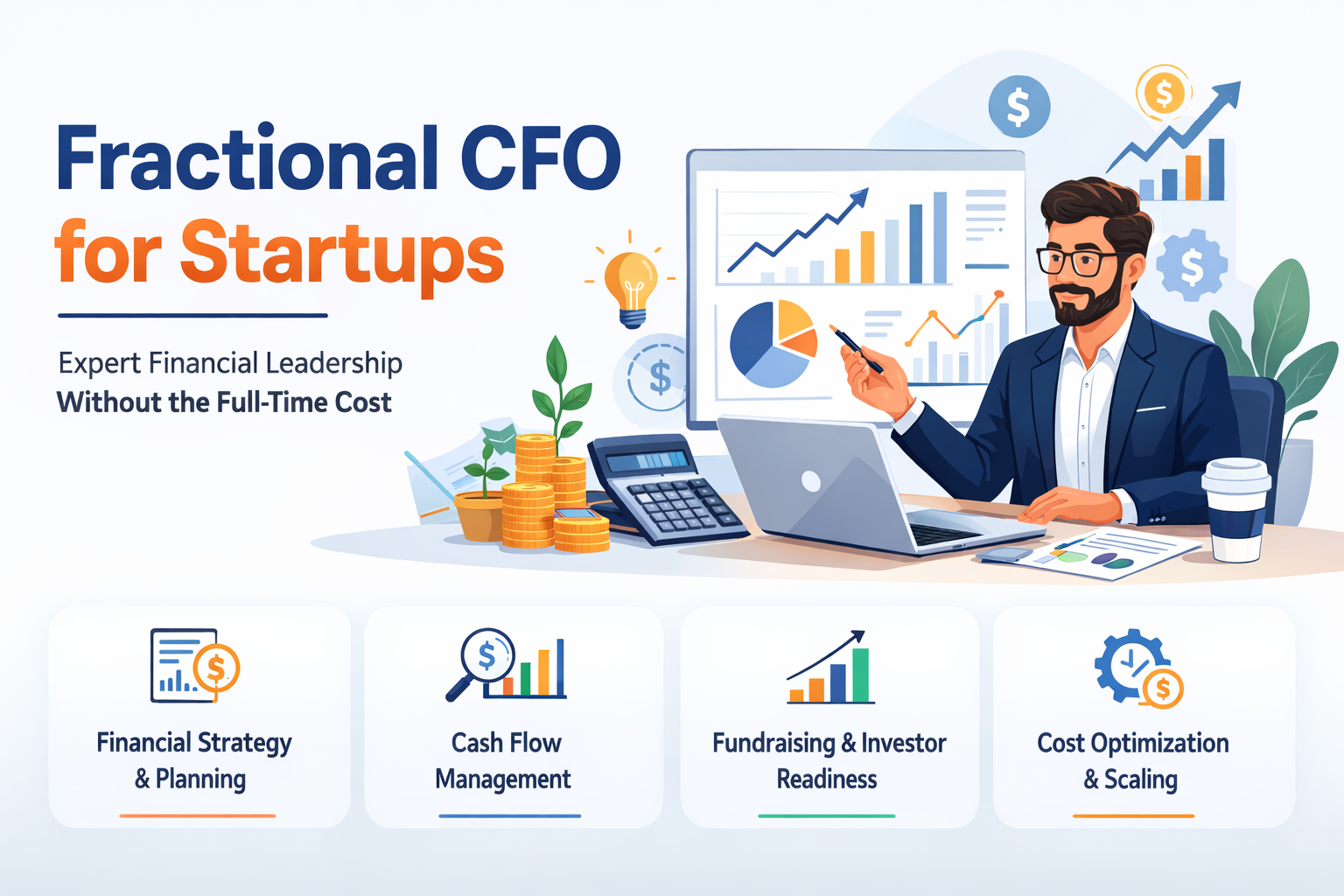
Fractional CFOs typically support startups with important financial activities such as financial planning, cash flow management, budgeting, and fundraising preparation. They also help founders understand the financial health of the business and make better strategic decisions.
For many startups, hiring a fractional CFO is a practical solution. It gives founders access to high-level financial expertise while maintaining flexibility and reducing operational costs.
Why Startups Hire a Fractional CFO
Many startups hire a fractional CFO to gain access to experienced financial guidance without the cost of a full-time executive. In the early stages of a business, managing finances properly is critical, but hiring a full-time CFO may not always be financially practical.
One of the main reasons startups hire a fractional CFO is to improve their financial planning and strategy. A fractional CFO helps founders understand their financial position, manage budgets, and plan future growth in a structured way.
Another important reason is cash flow management. Startups often operate with limited resources, so managing incoming and outgoing cash carefully is essential. A fractional CFO helps monitor cash flow, control expenses, and ensure the business remains financially stable.
Fractional CFOs are also valuable when startups are preparing for fundraising or investor discussions. They help create financial models, prepare financial reports, and present clear financial data that investors expect to see.
By working with a fractional CFO, startups can make better financial decisions, reduce financial risks, and build a stronger financial foundation for growth.
Key Responsibilities of a Fractional CFO
A fractional CFO helps startups manage their financial strategy and ensures that the business makes informed financial decisions. Although they may work on a part-time basis, their responsibilities often cover several important areas of financial management.
1. Financial Planning and Strategy
One of the main responsibilities of a fractional CFO is to develop a clear financial strategy for the startup. They help founders plan budgets, set financial goals, and create a roadmap for sustainable business growth.
2. Cash Flow Management
Managing cash flow is critical for startups. A fractional CFO monitors how money moves in and out of the business and ensures that the company always has enough funds to cover its operations.
3. Financial Reporting and Analysis
Fractional CFOs prepare and analyze financial reports such as income statements, cash flow statements, and financial forecasts. These reports help founders understand the financial health of the business and make better strategic decisions.
4. Fundraising Support
Startups often need financial guidance when preparing for fundraising. A fractional CFO helps create financial models, prepare investor presentations, and ensure that financial data is accurate and well organized.
5. Budgeting and Cost Control
Another important responsibility is managing budgets and controlling costs. A fractional CFO helps startups identify unnecessary expenses and allocate resources more efficiently.
6. Risk Management and Compliance
Fractional CFOs also help startups identify financial risks and ensure that the business follows proper financial practices and regulatory requirements. This helps protect the company from potential financial problems in the future.
When Should a Startup Hire a Fractional CFO
Not every startup needs a Chief Financial Officer from the very beginning. However, as the business grows and financial operations become more complex, many startups start looking for experienced financial guidance. This is when hiring a fractional CFO can become a practical solution.
1. When Financial Planning Becomes Complex
In the early stages, founders may manage basic finances themselves. But as revenue, expenses, and financial decisions become more complex, startups may need expert support to plan their financial strategy properly.
2. When the Startup Is Preparing for Fundraising
Startups often hire a fractional CFO when they are preparing to raise funding from investors. A fractional CFO can help create financial models, prepare financial projections, and organize financial data for investor presentations.
3. When Cash Flow Management Becomes Critical
If a startup begins facing challenges with managing cash flow, a fractional CFO can help analyze financial patterns and implement better financial management systems.
4. When the Business Starts Scaling
As startups grow and expand their operations, financial decisions become more important. Hiring a fractional CFO at this stage can help ensure that the company’s financial strategy supports long-term growth.
5. When Founders Need Strategic Financial Advice
Sometimes founders simply need experienced financial guidance to make better decisions about investments, budgeting, and growth planning. A fractional CFO can provide this strategic advice without the cost of hiring a full-time executive.
Benefits of Hiring a Fractional CFO for Startups
Hiring a fractional CFO can provide several advantages for startups, especially those that need experienced financial guidance but cannot afford a full-time executive. This approach allows startups to access high-level financial expertise while keeping costs manageable.
1. Access to Experienced Financial Expertise
A fractional CFO brings professional financial experience that can help startups manage complex financial decisions. Their knowledge helps founders understand financial data, plan strategies, and avoid common financial mistakes.
2. Cost-Effective Solution
One of the biggest benefits of a fractional CFO is cost efficiency. Startups can access CFO-level expertise without paying the full salary and benefits of a full-time executive, which helps reduce operational costs.
3. Better Financial Planning
Fractional CFOs help startups develop structured financial plans, including budgeting, forecasting, and long-term financial strategies. This helps startups maintain financial stability while planning for growth.
4. Improved Cash Flow Management
Effective cash flow management is essential for startup survival. A fractional CFO helps monitor income and expenses, ensuring the company maintains healthy cash flow and avoids financial disruptions.
5. Support for Fundraising and Investor Relations
When startups prepare to raise funding, a fractional CFO can assist with financial modeling, investor presentations, and financial reporting. This improves transparency and helps build investor confidence.
6. Strategic Business Guidance
Beyond financial management, fractional CFOs often provide strategic advice that helps founders make better decisions related to growth, investments, and resource allocation.
Common Challenges Startups Face Without a CFO
Many early-stage startups operate without a dedicated Chief Financial Officer. While this may help reduce costs in the beginning, the absence of financial leadership can create several challenges as the business grows.
1. Poor Financial Planning
Without a CFO, startups may struggle to create structured financial plans. Founders might focus more on product development and growth while overlooking long-term financial planning, which can lead to unstable financial management.
2. Cash Flow Problems
Cash flow management is one of the biggest challenges for startups. Without proper financial oversight, businesses may face situations where expenses exceed available funds, creating operational difficulties.
3. Difficulty Preparing for Fundraising
When startups seek external funding, investors expect clear financial data, forecasts, and well-prepared financial models. Without a CFO or financial expert, preparing these documents can be challenging.
4. Lack of Financial Insights
Financial reports and data analysis help founders understand the true financial health of the business. Without expert guidance, startups may miss important insights that could improve their decision-making.
5. Inefficient Cost Management
Startups without strong financial oversight may spend money inefficiently. A lack of proper budgeting and cost control can lead to unnecessary expenses and financial pressure on the business.
How Fractional CFO Services Work
Fractional CFO services are designed to provide startups with high-level financial expertise on a flexible basis. Instead of hiring a full-time executive, startups work with a CFO who supports the business part-time or on specific financial projects.
1. Initial Financial Assessment
The process usually begins with a financial assessment. The fractional CFO reviews the startup’s current financial situation, including revenue, expenses, cash flow, and financial reports. This helps identify financial strengths, weaknesses, and areas that need improvement.
2. Developing a Financial Strategy
After understanding the financial condition of the business, the fractional CFO helps develop a clear financial strategy. This may include budgeting plans, financial forecasts, and strategies for managing cash flow and expenses.
3. Ongoing Financial Guidance
Fractional CFOs often work with startups on a regular basis, such as weekly or monthly. During this time, they monitor financial performance, review reports, and provide strategic advice to help founders make better business decisions.
4. Support for Fundraising and Growth
Many startups also use fractional CFO services when preparing for fundraising or scaling their operations. The CFO helps build financial models, prepare investor-ready financial reports, and guide founders through financial discussions with investors.
5. Collaboration With the Leadership Team
A fractional CFO works closely with the startup’s leadership team, including founders and department heads. This collaboration ensures that financial decisions align with the company’s overall business strategy and long-term growth plans.
How to Choose the Right Fractional CFO
Choosing the right fractional CFO is an important decision for startups because this role directly influences financial strategy and long-term business growth. Founders should carefully evaluate several factors before selecting a fractional CFO.
1. Relevant Industry Experience
Startups should look for a fractional CFO who has experience working with startups or companies in similar industries. Experience in startup finance helps the CFO understand the challenges related to growth, fundraising, and financial planning.
2. Strong Financial Expertise
A good fractional CFO should have strong knowledge of financial planning, budgeting, forecasting, and financial reporting. Their expertise should help the startup build accurate financial models and maintain financial stability.
3. Strategic Thinking Ability
Beyond managing numbers, a fractional CFO should be able to provide strategic financial guidance. They should help founders make better decisions related to investments, growth strategies, and long-term financial planning.
4. Communication and Collaboration Skills
Since a fractional CFO works closely with founders, investors, and internal teams, strong communication skills are essential. They must be able to explain financial information clearly and support collaboration across different departments.
5. Flexible Engagement Model
Startups should also consider the working model of the fractional CFO. A flexible engagement structure—such as part-time, project-based, or advisory support—can help the startup access financial expertise while keeping costs manageable.
Conclusion
A fractional CFO can play a valuable role in helping startups manage their finances more effectively. Instead of hiring a full-time executive, startups can access experienced financial leadership on a flexible basis, which makes it a practical solution for growing companies.
Fractional CFOs support startups with important activities such as financial planning, cash flow management, budgeting, and fundraising preparation. Their guidance helps founders understand the financial health of the business and make better strategic decisions.
As startups grow and financial operations become more complex, having professional financial expertise becomes increasingly important. By working with a fractional CFO, startups can strengthen their financial management, reduce risks, and build a stronger foundation for long-term growth.
Related Posts

Startup Booted Financial Modeling
Understand how startups plan revenue, expenses, and cash flow using financial modeling.
Startup Booted Fundraising Strategy
Learn how startups can grow using bootstrapping before raising external funding.
software development for startups
Discover how startups build scalable software and launch successful digital products.